

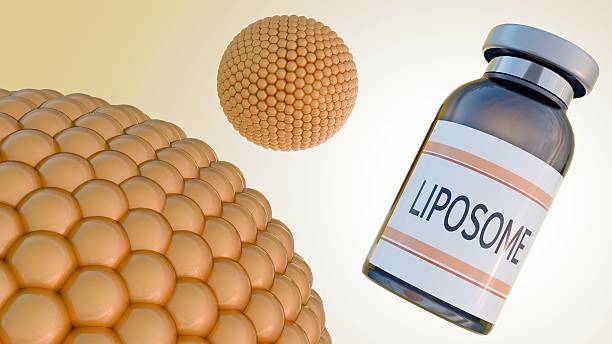
A colloidal dispersion represents a special type of mixture where extremely fine particles of one substance are evenly distributed within another substance. These particles are larger than molecules but smaller than those found in suspensions, allowing them to remain dispersed for long periods without settling. This balanced structure gives colloidal systems properties that are neither purely homogeneous nor fully heterogeneous.
In modern science and industry, has gained even more importance due to advancements in nanotechnology, pharmaceuticals, food processing, and environmental engineering. Understanding how colloids behave helps scientists design stable products and efficient systems used in everyday life.
Meaning of Colloidal Dispersion
A can be defined as a mixture in which the dispersed particles have a size range of approximately 1 to 1000 nanometers. These particles are uniformly spread throughout a continuous medium, creating a system that appears uniform to the naked eye but is microscopically non-uniform.
Unlike true solutions, colloidal particles do not dissolve completely. However, unlike suspensions, they do not settle under gravity, which makes unique and practically useful.
Basic Structure of a Colloidal Dispersion
Dispersed Phase in Colloidal Dispersion
The dispersed phase refers to the substance present in the form of tiny particles. These particles can exist as solids, liquids, or gases depending on the system.
Dispersion Medium
The dispersion medium is the substance that holds and supports the dispersed particles. It plays a crucial role in determining the physical behavior and stability of the .
The interaction between these two components defines the nature and performance of a colloidal system.
Types of Colloidal Dispersion Based on Physical States
Solid-Based Colloidal Dispersion
-
Sol: Solid particles dispersed in a liquid medium (e.g., starch solution, paints)
-
Solid foam: Gas dispersed in a solid medium (e.g., foam rubber)
Liquid-Based Colloidal Dispersion
-
Emulsion: Liquid dispersed in another liquid (e.g., milk, lotions)
-
Gel: Liquid trapped in a solid network (e.g., jelly, curd)
Gas-Based Colloidal Dispersion
-
Aerosols: Solid or liquid particles dispersed in gas (e.g., smoke, mist)
Each type of different physical and chemical properties depending on its composition.
Characteristic Features of Colloidal Dispersion
Intermediate Particle Size
The particle size of a lies between true solutions and suspensions, giving it stability and surface activity.
Light Scattering Phenomenon
When light passes through a , it becomes visible due to scattering by dispersed particles. This phenomenon helps distinguish colloids from true solutions.
Continuous Random Motion
Colloidal particles constantly move in an irregular pattern due to collisions with surrounding molecules. This motion prevents particles from settling at the bottom.
Electrical Nature of Colloids
Most colloidal particles carry either a positive or negative charge. This charge creates repulsion between particles, helping maintain uniform dispersion.
Stability of Colloidal Dispersion
The stability of a refers to its ability to remain evenly distributed without forming clumps or precipitates.
Factors Affecting Stability
-
Particle size and shape
-
Electrical charge on particles
-
Nature of the dispersion medium
-
Temperature and pH
Coagulation in Colloidal Dispersion
When the electric charge on particles is neutralized, the colloidal system may lose stability and particles may aggregate. This process is known as coagulation and is widely used in water purification.
Preparation Techniques of Colloidal Dispersion
Mechanical and Physical Methods
These methods break large particles into colloidal dimensions:
-
High-speed mixing
-
Ultrasonic vibration
-
Grinding and milling
Chemical Formation Methods
In these techniques, colloidal particles are formed by chemical reactions such as:
-
Double decomposition
-
Oxidation and reduction
-
Controlled hydrolysis
Both approaches are commonly applied in laboratories and large-scale manufacturing.
Purification of Colloidal Dispersion
Colloidal dispersion systems often contain unwanted ions or impurities. To improve quality and stability, purification methods are used:
-
Dialysis: Removal of small ions using a semi-permeable membrane
-
Ultrafiltration: Separation using pressure and special membranes
-
Electrodialysis: Use of an electric field to remove charged impurities
These techniques are essential in pharmaceutical and biochemical industries.
Modern Applications of Colloidal Dispersion
Colloidal Dispersion in Medicine
-
Drug delivery systems use colloidal carriers for controlled release
-
Blood plasma behaves as a natural colloidal system
Industrial Uses
-
Paints and coatings rely on stable for uniform color
-
Rubber and plastic manufacturing involve colloidal latex systems
Food and Beverage Industry
-
Ice cream texture depends on colloidal fat dispersion
-
Sauces and creams require stable emulsions for consistency
Environmental Applications
-
Water treatment plants remove colloidal impurities through coagulation
-
Air pollution control deals with aerosol-type
Importance of Colloidal Dispersion in Modern Science
Colloidal dispersion acts as a bridge between molecular chemistry and material science. Its study supports advancements in nanomaterials, cosmetics, agriculture, and environmental sustainability. With ongoing research, colloidal systems are becoming more efficient, eco-friendly, and customizable for specific applications.
Advantages and Drawbacks of Colloidal Dispersion
Advantages
-
High surface area enhances chemical reactivity
-
Long-term stability compared to suspensions
-
Useful in controlled-release technologies
Drawbacks
-
Sensitive to changes in temperature and electrolytes
-
Requires stabilizers to maintain uniformity
Understanding both aspects helps in the effective design of colloidal systems.
Strong Conclusion
To summarize, is a scientifically significant and practically essential type of mixture that impacts numerous aspects of daily life and industrial innovation. Its unique particle size, stability mechanisms, and dynamic behavior make it invaluable in medicine, food technology, environmental management, and advanced material science. As modern research continues to evolve, remains a key concept driving technological progress and sustainable solutions across multiple fields.
Frequently Asked Questions (FAQs)
1. What makes colloidal dispersion different from suspension?
Colloidal dispersion has much smaller particles that do not settle easily, unlike suspensions.
2. Can colloidal dispersion be seen with the naked eye?
No, colloidal particles are invisible to the naked eye but can scatter light.
3. Why is colloidal dispersion stable for long periods?
Electrical charge and continuous particle motion prevent aggregation.
4. Is milk an example of colloidal dispersion?
Yes, milk is an emulsion where fat droplets are dispersed in water.
5. How is colloidal dispersion useful in daily life?
It is used in food products, medicines, cosmetics, paints, and water purification.