

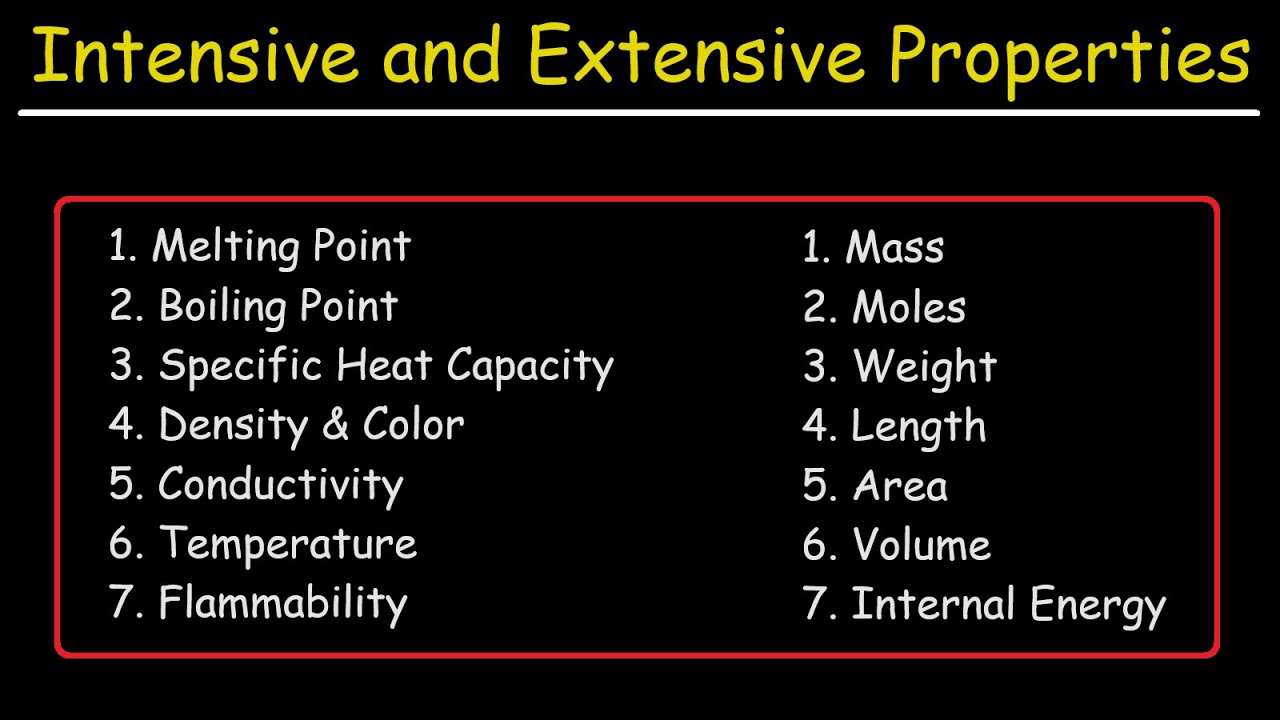
In the fields of chemistry and physics, the term intensive properties refers to the characteristics of matter that stay the same no matter how much of the substance is present. These intrinsic features help scientists identify materials, predict behavior during reactions, and make critical comparisons between different substances. In simple terms, intensive properties describe what a substance is, rather than how much of it exists.
While this idea may seem straightforward, a deeper look reveals how essential are for everything from lab experiments to industrial innovation.
What Are Intensive Properties? A Clear Definition
Intensive properties are attributes of matter that remain unchanged when the size or mass of a sample is altered. Unlike extensive properties, which scale with quantity, are inherent to the substance itself.
For example, the melting point of ice is the same whether you have a teaspoon or an entire glacier. This consistency makes reliable tools for identifying and analyzing materials.
Examples of Intensive Properties in Everyday Life
Understanding becomes easier when you connect them to familiar examples. Below are some common and scientifically important examples:
1. Temperature
Temperature remains the same regardless of the amount of material present. Whether you measure the warmth of a cup of coffee or a pot of boiling water, the temperature at boiling (100°C at sea level) stays constant.
2. Density
Density is defined as the mass of a substance per unit volume. It is an intensive property because a small sample of gold and a large gold bar have the same density, under identical conditions.
3. Color and Appearance
The color of a substance doesn’t depend on how much of it you have. A single sugar crystal and a cup of sugar look white because color is an intensive property.
4. Pressure
In a closed system, gas pressure remains an intensive property. Increasing the amount of gas may change the system’s volume or temperature, but pressure itself is not dependent on the amount of substance.
5. Boiling and Melting Points
These temperatures at which substances change state are fixed characteristics. Water always boils at the same point (under a given pressure), regardless of volume.
Intensive Properties vs. Extensive Properties: What’s the Difference?
To fully grasp , it’s important to compare them with extensive properties.
| Intensive Properties | Extensive Properties |
|---|---|
| Independent of sample size | Depends on how much material exists |
| Used for identifying substances | Used for measuring amount |
| Examples: density, temperature | Examples: mass, volume |
In other words, extensive properties like mass or total energy increase when you add more substance, while do not change.
Why Intensive Properties Are Important in Science
Reliable Identification of Substances
One of the strongest advantages of intensive properties lies in material identification. Scientists can determine what a substance is based on properties like density or melting point, even without knowing how much of it they have. For example, a mineralogist might identify a rock sample by measuring its density.
Consistency in Experimental Design
In laboratories, consistency is key. allow researchers to set reproducible conditions, compare results, and validate findings even when working with different sample sizes.
Applications in Analytical Chemistry
In analytical chemistry, help analyze mixtures and detect impurities. A small change in properties like refractive index or boiling point can signal contamination or molecular variation.
How Intensive Properties Are Used in Real‑World Industries
Engineering and Materials Science
Engineers rely heavily on when choosing materials for specific functions. For example, they consider thermal conductivity when selecting materials for heat exchangers, or hardness when choosing metals for construction.
Pharmaceutical Development
In drug manufacturing, properties like solubility, melting point, and density influence how medicines are formulated, stored, and delivered. Consistency in these properties helps maintain quality and effectiveness.
Environmental Monitoring
Environmental scientists monitor water purity using such as pH, salinity, and turbidity. These measurements help determine ecosystem health without considering sample volume.
Food and Beverage Industry
Food producers use to control quality, texture, and flavor. Measures like refractive index can indicate sugar content, while boiling points can determine processing standards.
How Heat and Pressure Affect Intensive Properties
Although are independent of quantity, they can change under different conditions like temperature or pressure.
Temperature Dependence
Some intensive properties, like density or electrical conductivity, shift as temperature changes. When heat is added, molecules move faster, altering the property’s measured value.
Pressure Influence
Pressure can also affect certain . For instance, the boiling point of water increases at higher pressures. These variations are important in engineering and science — especially when designing systems for extreme environments.
Using Intensive Properties to Identify Unknown Substances
Scientists often rely on intensive properties when identifying unknown materials. Let’s look at a simple real‑life application:
A chemist receives an unknown liquid sample. By measuring its boiling point, density, and refractive index, the chemist can narrow down possible substances without needing to know how much liquid is present.
This type of identification is especially valuable in fields like forensics, pharmaceuticals, and materials testing.
Common Misunderstandings About Intensive Properties
Despite being a foundational concept, some misconceptions still exist.
Misconception 1: “All Properties Are Intensive”
Not true — many physical properties, like mass, energy, or total volume, depend on how much substance there is.
Misconception 2: “Intensive Properties Can’t Change”
Intensive properties can change with temperature, pressure, or phase. What doesn’t change is their independence from material quantity.
How Students Can Master Intensive Properties
Understanding intensive properties becomes easier with practical examples and visual comparisons. Here are some study tips:
-
Group properties into intensive and extensive lists.
-
Experiment with measurements in the lab (e.g., temperature vs. mass).
-
Use real samples — a chunk of metal versus a powder — to reinforce the concept.
Conclusion: The Role of Intensive Properties in Science and Technology
Intensive properties are essential for understanding matter’s characteristics and behavior. Because they do not depend on the amount of material present, they form the backbone of identification, comparison, and analysis across chemistry, physics, engineering, environmental science, and industry applications.
By mastering these concepts, students and professionals alike can distinguish materials, interpret experimental results, and make informed decisions in research and development. From boiling points in laboratory setups to density measurements in manufacturing processes, intensive properties play a central role in modern science.
5 Frequently Asked Questions (FAQs)
1. What is an example of an intensive property?
An example of an intensive property is density, because it remains the same regardless of how much of a substance you have.
2. How do intensive properties differ from extensive properties?
Intensive properties do not change with sample size, while extensive properties — such as mass and volume — do change.
3. Can intensive properties change with temperature?
Yes, while they are independent of quantity, intensive properties can vary with temperature and pressure.
4. Why are intensive properties useful in science?
They help identify substances, ensure consistency in experiments, and support accurate analysis across fields.
5. Are color and odor considered intensive properties?
Yes. Color and odor are intrinsic characteristics that do not depend on the amount of material present.