

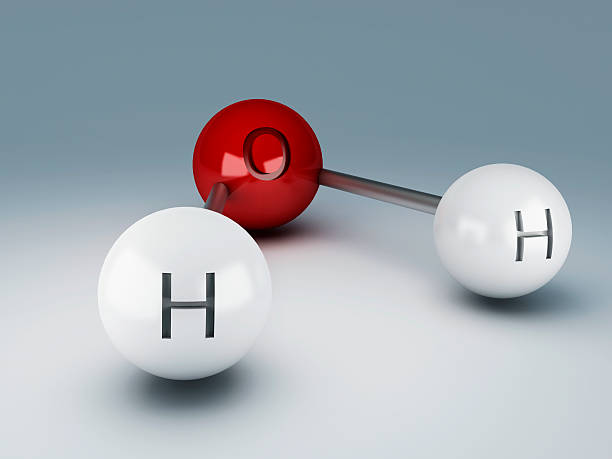
Hydrogen bonding is necessary for many of the chemical and biological processes that make life possible. Although it is weaker than covalent or ionic bonding, its influence is far greater than its strength suggests. These bonds quietly control how water behaves, how DNA holds genetic information, and how proteins perform their functions. Without hydrogen bonding, cells would lose structure, biological reactions would slow down, and living systems would fail to function properly. This article explores why is necessary across chemistry, biology, and the natural world.
What Is Hydrogen Bonding and How Does It Work?
Hydrogen bonding occurs when a hydrogen atom, already bonded to a highly electronegative atom such as oxygen or nitrogen, becomes attracted to another electronegative atom nearby. This attraction happens because electrons are unevenly shared, giving hydrogen a slight positive charge.
Unlike permanent chemical bonds, hydrogen bonds are temporary and constantly forming and breaking. This unique balance of strength and flexibility makes them ideal for dynamic systems like living organisms, where molecules must remain stable yet adaptable.
Hydrogen Bonding Is Necessary for the Essential Properties of Water
Why Water Remains Liquid at Room Temperature
Hydrogen bonding is necessary for water to exist as a liquid under normal environmental conditions. Individual water molecules are small, but hydrogen bonds create a strong network between them. This network requires significant energy to break, preventing water from evaporating too easily.
If did not exist, water would behave like other small molecules and remain gaseous, making life on Earth impossible.
Cohesion, Adhesion, and Surface Tension
Hydrogen bonding explains why water molecules cling to each other and to other surfaces. Cohesion allows water to form droplets, while adhesion helps it travel through narrow spaces. These properties support plant life by enabling water to move upward through roots and stems.
Surface tension, another result of hydrogen bonding, plays a role in cell structure and allows some organisms to live on the water’s surface.
Hydrogen Bonding Is Necessary for DNA Structure and Genetic Integrity
Stability of the Double Helix
is necessary to hold together the two strands of DNA. Each nitrogenous base pairs with its specific partner through hydrogen bonds, forming a stable yet flexible structure. These bonds ensure DNA remains intact while allowing it to unzip when genetic information needs to be copied.
Accurate Genetic Information Transfer
Because hydrogen bonds are highly specific, they ensure correct base pairing during DNA replication. This accuracy helps prevent genetic errors and maintains the continuity of life across generations.
Hydrogen Bonding Is Necessary for Protein Folding and Function
Creating Functional Protein Shapes
Proteins begin as linear chains of amino acids but must fold into complex three-dimensional structures to work properly. stabilizes these folded shapes by linking different parts of the protein backbone.
The precise folding guided by hydrogen bonds determines whether a protein functions as an enzyme, hormone, or structural molecule.
Supporting Enzyme Efficiency
Enzymes rely on to bind substrates and catalyze reactions. These bonds position molecules correctly and stabilize transition states, allowing reactions to occur rapidly under mild conditions.
Without hydrogen bonding, many metabolic reactions would become inefficient or fail entirely.
Hydrogen Bonding Is Necessary for Cell Membranes and Cellular Organization
Cell membranes form the boundary between a cell and its environment. occurs between water molecules and the polar heads of membrane lipids, helping the membrane remain stable in aqueous environments.
Additionally, hydrogen bonds stabilize membrane proteins responsible for transport, communication, and energy production. This organization allows cells to function as controlled, self-regulating systems.
Hydrogen Bonding Is Necessary for Molecular Solubility and Transport
Many biologically important molecules dissolve in water due to hydrogen bonding. Sugars, amino acids, and nucleotides interact easily with water molecules, allowing them to move freely within cells and tissues.
This solubility enables:
-
Nutrient absorption
-
Waste elimination
-
Hormone and signal transport
Without hydrogen bonding, these molecules would clump together, disrupting biological balance.
Hydrogen Bonding Is Necessary for Temperature Regulation
Hydrogen bonding allows water to absorb and release heat slowly. This property helps organisms maintain stable internal temperatures and protects ecosystems from extreme temperature fluctuations.
Oceans, lakes, and rivers act as thermal buffers because hydrogen bonds store heat energy, reducing sudden environmental changes.
Hydrogen Bonding Is Necessary for Flexibility and Adaptation in Living Systems
One of the most important aspects of is its reversibility. Bonds can form and break easily, allowing molecules to change shape when needed.
This flexibility supports:
-
Muscle contraction
-
Signal transmission
-
Gene regulation
Living systems depend on this balance between stability and movement, which uniquely provides.
Hydrogen Bonding Is Necessary in Modern Science and Technology
Beyond biology, plays a vital role in pharmaceuticals, material science, and nanotechnology. Drug molecules are designed to form hydrogen bonds with specific targets, improving effectiveness and reducing side effects.
Synthetic materials also use to enhance durability, elasticity, and self-healing properties.
Conclusion: Why Hydrogen Bonding Is Necessary for Life to Exist
Hydrogen bonding is necessary for maintaining the structure, function, and adaptability of living systems. It governs the behavior of water, stabilizes DNA and proteins, supports cellular organization, and enables biological reactions to occur efficiently. Though individually weak, hydrogen bonds collectively form the foundation of life’s complexity. Without them, biological order would collapse, and life as we know it would not exist.
Frequently Asked Questions (FAQs)
1. Why is hydrogen bonding essential for water?
Hydrogen bonding gives water its liquid state, high heat capacity, and ability to dissolve essential biological molecules.
2. How does hydrogen bonding affect DNA?
It holds DNA strands together while allowing them to separate during replication and transcription.
3. Is hydrogen bonding permanent?
No, hydrogen bonds are temporary, which allows flexibility in biological systems.
4. Why do proteins rely on hydrogen bonding?
Hydrogen bonds stabilize protein structure and enable enzymes to function efficiently.
5. What would happen without hydrogen bonding?
Water would not support life, DNA would lose stability, and biological processes would fail.