

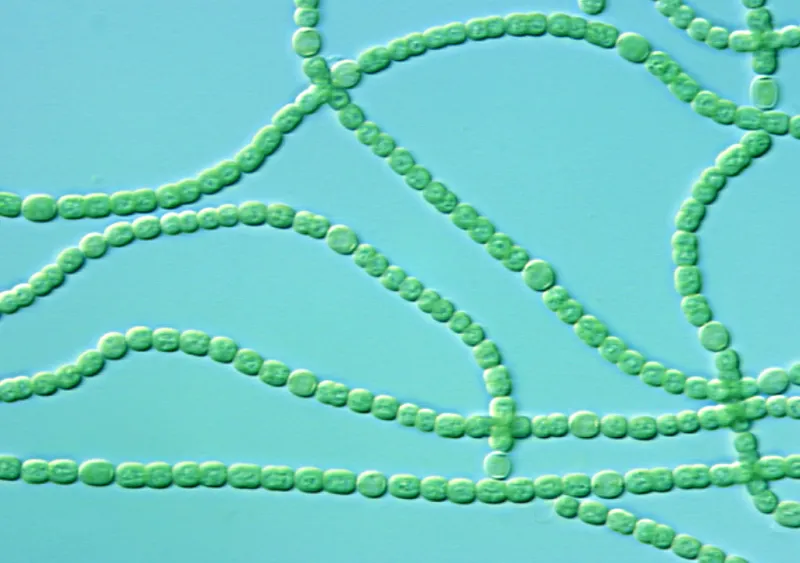
The term cyanobacteria may sound scientific, but most people recognize it by its common name, blue-green algae. Cyanobacteria are not true algae; they are photosynthetic bacteria that have existed for over 3.5 billion years. Their ability to produce oxygen through photosynthesis fundamentally changed Earth’s atmosphere and paved the way for the evolution of complex life forms. Knowing the cyanobacteria common name helps in linking scientific research to everyday understanding, making it easier to appreciate their role in ecosystems, agriculture, and environmental health.
What Are Cyanobacteria?
Cyanobacteria are prokaryotic microorganisms capable of photosynthesis. Unlike eukaryotic algae, they do not have a nucleus or membrane-bound organelles. Despite this, they are incredibly versatile and can survive in extreme environments, including deserts, hot springs, glaciers, and oceans.
These microorganisms are responsible for one of Earth’s most important evolutionary events: the Great Oxidation Event, during which they released oxygen into the atmosphere, dramatically altering the planet’s environment and enabling life as we know it.
The Cyanobacteria Common Name: Blue-Green Algae
The commonly used name, blue-green algae, originates from the cyanobacteria’s distinctive pigments, phycocyanin (blue) and chlorophyll-a (green). These pigments allow them to absorb sunlight efficiently and carry out photosynthesis.
Importance of the Common Name
Using a common name simplifies scientific communication, especially in environmental studies. For example, harmful algal blooms (HABs) caused by cyanobacteria are often reported in water bodies using the term blue-green algae. This terminology helps raise awareness among the general public about potential health risks, water safety, and environmental impacts.
Key Features of Cyanobacteria
Cyanobacteria have unique characteristics that make them both fascinating and ecologically significant:
-
Photosynthetic Capability: Cyanobacteria use chlorophyll and phycobiliproteins to convert sunlight into energy.
-
Prokaryotic Structure: They lack a nucleus but possess specialized thylakoid membranes for photosynthesis.
-
Reproduction: Cyanobacteria primarily reproduce by binary fission, although some form akinetes for survival under harsh conditions.
-
Versatile Habitat: They thrive in freshwater, marine, and terrestrial ecosystems, as well as extreme environments.
-
Ecological Contribution: Cyanobacteria fix nitrogen, enrich soil fertility, and serve as primary producers in aquatic food webs.
Types of Cyanobacteria
Cyanobacteria are diverse, with thousands of species across various habitats. Common examples include:
-
Microcystis: Often responsible for harmful algal blooms in lakes and reservoirs.
-
Anabaena: Filamentous cyanobacteria capable of nitrogen fixation.
-
Nostoc: Forms gelatinous colonies and can survive in soils and freshwater.
-
Oscillatoria: Known for its filamentous structure and oscillating movement in water.
Each type has unique adaptations that allow them to thrive in specific environments and contribute differently to ecosystems.
Cyanobacteria and Their Environmental Significance
Cyanobacteria are essential for life on Earth but can also pose environmental challenges.
Positive Impacts
-
Oxygen Production: Cyanobacteria were key players in oxygenating the atmosphere billions of years ago.
-
Nitrogen Fixation: Certain species convert atmospheric nitrogen into forms usable by plants, enhancing soil fertility.
-
Biofertilizers: They are used in agriculture, particularly in rice fields, to boost crop growth naturally.
-
Primary Producers: In aquatic ecosystems, cyanobacteria form the base of the food chain, supporting fish and other wildlife.
Negative Impacts
-
Harmful Algal Blooms (HABs): Excessive cyanobacteria growth can produce toxins harmful to humans, animals, and aquatic life.
-
Water Quality Issues: Dense blooms reduce oxygen in water, creating dead zones that affect aquatic ecosystems.
Effective management of cyanobacteria populations is crucial to balance their ecological benefits with potential hazards.
Cyanobacteria in Modern Research and Industry
Cyanobacteria are not just environmentally significant—they also offer practical applications:
-
Biofuel Production: Certain species produce lipids that can be converted into renewable energy.
-
Bioremediation: Cyanobacteria can remove pollutants, including heavy metals, from water systems.
-
Pharmaceuticals: Some cyanobacteria produce compounds with antibacterial, antiviral, and anticancer properties.
-
Sustainable Agriculture: Cyanobacteria-based biofertilizers reduce chemical fertilizer use and improve soil health.
Their versatility makes cyanobacteria an ongoing focus in biotechnology, environmental science, and sustainable development initiatives.
Common Misconceptions About Cyanobacteria
-
They Are True Algae: Cyanobacteria are bacteria, not algae.
-
All Cyanobacteria Are Harmful: Many species are harmless or beneficial.
-
They Only Exist in Water: Cyanobacteria inhabit soil, rocks, and extreme environments too.
Correcting these misconceptions helps the public better understand the ecological importance and practical applications of cyanobacteria.
Conclusion
The cyanobacteria common name, blue-green algae, connects scientific knowledge with public understanding. These ancient microorganisms have shaped the Earth’s atmosphere, contributed to ecological balance, and continue to offer solutions in agriculture, biotechnology, and environmental management. While their overgrowth can pose challenges like harmful algal blooms, cyanobacteria remain invaluable for life on Earth. Recognizing their significance, both scientifically and practically, is essential for environmental awareness and sustainable development.
FAQs About Cyanobacteria
1. What is the common name of cyanobacteria?
The common name of cyanobacteria is blue-green algae, due to their characteristic pigments.
2. Are cyanobacteria harmful to humans?
Some cyanobacteria produce toxins during harmful algal blooms, which can be dangerous, but many species are safe and beneficial.
3. Where can cyanobacteria be found?
Cyanobacteria are found in freshwater, marine environments, soil, rocks, and extreme habitats like hot springs or glaciers.
4. Why are cyanobacteria important ecologically?
They produce oxygen, fix nitrogen, support aquatic food webs, and improve soil fertility.
5. How are cyanobacteria used in industry?
Cyanobacteria are utilized in biofuel production, bioremediation, pharmaceuticals, and as natural biofertilizers for sustainable agriculture.