

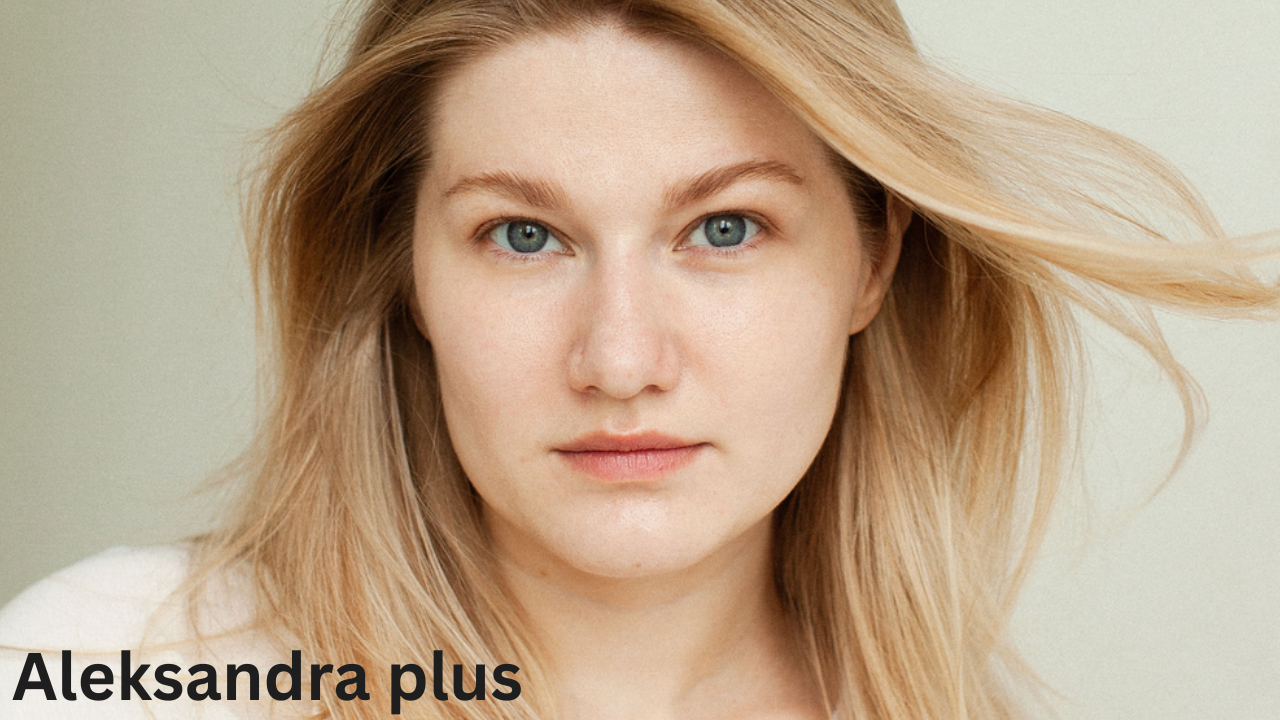
In recent years, the name Aleksandra Plus has emerged as a meaningful voice in the fashion industry — a plus‑size model whose presence challenges traditional standards and advocates for inclusivity. For many, Aleksandra Plus represents more than just looks — she symbolizes self‑acceptance, body confidence, and the possibility of inclusivity in an industry long dominated by narrow definitions of beauty. As the fashion world grapples with representation, Aleksandra Plus stands out as both a trailblazer and a source of empowerment for many who seek visibility and acceptance.
Who is Aleksandra Plus?
Aleksandra Plus is signed with Respect Model Management, a modeling agency that lists her as a professional plus‑size model. According to her agency profile, her measurements are 172 cm in height, with bust 105 cm, waist 84 cm, and hips 114 cm — corresponding to a dress size of EU 42.
Her look — blonde hair, blue eyes — combined with her proportions, positions her not only as a plus‑size model but as someone who straddles the line between commercial and plus‑size modeling. This versatility allows her to work on a variety of modeling assignments, from editorial shoots to mainstream commercial projects.
Through her work, Aleksandra Plus gives visibility to body types often underrepresented in mainstream fashion, making her a relevant name in discussions around inclusivity and representation.
Why Aleksandra Plus Matters in Modern Fashion
Breaking Narrow Beauty Standards
For decades, the fashion industry has largely celebrated a narrow body type — typically tall, slender, and conforming to rigid “sample-size” measurements. With Aleksandra Plus in the spotlight, that narrative shifts: she reminds the industry and the public that beauty isn’t one-size-fits-all. Her presence asserts that curves, fuller figures, and diverse shapes deserve just as much visibility as the traditional model body type.
This isn’t just about appearance — it’s about representation. When people see models like Aleksandra Plus, it normalizes a broader spectrum of body types and challenges the unrealistic ideals that have dominated for so long.
Encouraging Inclusivity & Market Diversity
Aleksandra Plus’s career pressures designers, brands, and agencies to rethink their standards. By working professionally and visibly, she demonstrates there is demand and value for plus‑size representation. This can influence clothing lines to offer extended sizing, more inclusive cuts, and better design that accommodates a variety of body shapes.
Moreover, representation can shape consumer behavior and expectations. When more people see plus‑size bodies in fashion, they feel seen, validated, and empowered to demand more inclusive fashion options.
Empowering Confidence and Self‑Acceptance
Beyond clothing and brands, the impact of Aleksandra Plus is personal and cultural. Her modeling success sends a message: you don’t need to fit an outdated ideal to be beautiful, desirable, or successful. For many people — especially those who’ve struggled with body image — that message can be life changing.
Her career encourages people to embrace their real bodies, be confident in their own skin, and reject narrow definitions of beauty. Through that, she contributes to the broader movement of self‑acceptance and body positivity.
The Challenges of Plus‑Size Representation: What Aleksandra Plus and Others Face
Persistent Industry Bias & Limited Opportunities
Despite progress, the fashion industry still has deep roots in traditional beauty standards. For many designers and casting directors, “sample size” remains the default — making it difficult for plus‑size models to access the same high‑fashion opportunities as straight‑size peers.
Even when brands promote “inclusivity,” actual representation can remain tokenistic — featuring just a few plus‑size models, often those who fit certain “idealized plus-size” proportions rather than representing the full range of body diversity.
Market Limitations: Design, Fit, and Sizing Constraints
Creating fashion that truly fits plus‑size bodies requires thoughtful design: proportion‑adjusted cuts, diversified sample sizing, and tailoring that flatters curves rather than hides them. Historically, many brands have avoided this due to cost, inertia, or fear of shrinking profit margins.
As a result, even when plus‑size models exist, the clothes available to consumers may remain limited, ill-fitting, or unflattering — undermining representation and discouraging real inclusivity.
The Struggle Against Tokenism and Superficial Inclusion
Representation alone isn’t enough. When brands only feature plus‑size models sporadically — often limited to certain campaigns or marketing pushes — it risks being a marketing tactic rather than genuine inclusion. Many critics argue this superficial approach fails to challenge the deeper structural biases in fashion
For models like Aleksandra Plus, that means constantly fighting to be seen not as a “diversity checkbox” but as a legitimate, professional model whose body type deserves equal respect and opportunity.
The Bigger Picture: Inclusivity, Body Positivity, and Cultural Change
Plus‑Size Modeling in Industry History
The concept of a “plus‑size model” has existed for decades; in Europe, certain fashion houses and publications began including larger‑bodied models in the late 20th century. Over time, plus‑size modeling evolved from niche catalogs and specialized lines to mainstream recognition, though the pace and consistency of inclusion remain uneven.
Still, figures like Aleksandra Plus illustrate that plus‑size modeling is not a passing trend — it’s part of a long gradual effort to broaden representation and challenge restrictive beauty norms.
The Role of Social Media and Community in Changing Perspectives
With social media and online communities, representation is no longer confined to high‑fashion runways or print magazines. Plus‑size models, influencers, and ordinary people share their stories, body transformations, fashion choices, and experiences — creating grassroots movements that redefine beauty standards from the ground up.
This democratization of representation helps shift public perception: clothes, style, and beauty become accessible to more people, regardless of size or shape.
Why Real Representation Matters — Beyond Aesthetics
True inclusivity goes beyond showcasing bodies. It’s about dignity, respect, identity, and the power to feel seen. When models like Aleksandra Plus succeed, they help dismantle shame around non‑standard bodies, challenge social stigma, and foster a culture of acceptance.
For many, this can mean better self‑image, improved mental health, and a broader sense of belonging in a world that often demands conformity.
Aleksandra Plus: What Her Journey Tells Us — Lessons We Can Learn
-
Authenticity over idealization — Aleksandra Plus represents real bodies, not an airbrushed ideal. That authenticity helps many relate to her and see themselves reflected in fashion.
-
Inclusivity isn’t optional — it’s essential — Fashion and media have power. By including diverse body types, they influence culture, self‑perception, and societal standards.
-
Representation must go hand in hand with action — It’s not enough to show a plus‑size model now and then. For real change, brands must commit to inclusive sizing, thoughtful design, and diverse casting.
-
Empowerment through visibility — Visibility does more than sell clothes: it sends a message of acceptance and belonging. For many, that’s just as important as fashion.
-
Change is ongoing and collective — Progress doesn’t come overnight. It requires persistent advocacy from models, designers, brands, and consumers alike.
Conclusion
Aleksandra Plus embodies the spirit of a changing fashion world — one that recognizes beauty in all its forms, refuses to confine identity to narrow standards, and honors individuality. Her career and visibility challenge deep‑rooted biases in the modeling industry and help pave the way for broader, more inclusive representation.
While many challenges remain — industry bias, limited opportunities, tokenism — the presence of models like Aleksandra Plus reminds us that change is possible. Through authenticity, perseverance, and community support, inclusivity can move from a buzzword to a norm.
As society continues evolving, embracing diversity not just in size but in shape, color, identity, and expression, figures like Aleksandra Plus will remain crucial — not only as models, but as catalysts for acceptance, empathy, and lasting change.
Frequently Asked Questions (FAQs)
Q1: What makes Aleksandra Plus different from typical fashion models?
A1: Aleksandra Plus is a plus‑size model whose body measurements (172 cm height; bust 105 cm, waist 84 cm, hips 114 cm; dress size EU 42) place her outside traditional “sample-size” norms. Her presence challenges conventional fashion standards and promotes broader representation of body types.
Q2: Why is representation of plus‑size models like Aleksandra Plus important?
A2: Representation helps normalize diverse body types, allowing more people to see themselves reflected in media and fashion. It challenges unrealistic beauty ideals, promotes body positivity, and encourages inclusive design and sizing from brands — which in turn empowers individuals and fosters self‑acceptance.
Q3: Does the fashion industry truly support plus‑size models now?
A3: While there has been progress over the years, the industry still largely favors traditional slim body types. Many brands still rely on standard sample sizes, and plus‑size representation often remains tokenistic or limited.
Q4: What challenges do plus‑size models and consumers face when it comes to fashion?
A4: Challenges include limited sizing options, ill-fitting clothing designs not tailored for fuller bodies, industry bias favoring straight-size models, and tokenistic inclusion. Even when plus‑size models are hired, the clothing offered may not flatter or fit diverse body shapes well.
Q5: How can the fashion industry become more inclusive in a meaningful way?
A5: Meaningful inclusivity requires more than occasional plus‑size representation. It demands commitment: offering extended size ranges, designing garments with diverse body shapes in mind, casting models of all sizes regularly (not tokenistically), and genuinely celebrating body diversity rather than treating it as a trend.